On our journey to embodiment of our full selves, we wanted to capture ourselves adorned with cultural artifacts that showcase our ancestral identities.
Unlike many of our ancestors who were first photographed by colonizers, we decided how we wanted to be portrayed in our self-portraits. This is one way that we challenge the experience of being othered. It’s a journey of curiosity, self-agency, and healing to know a deeper version of ourselves.
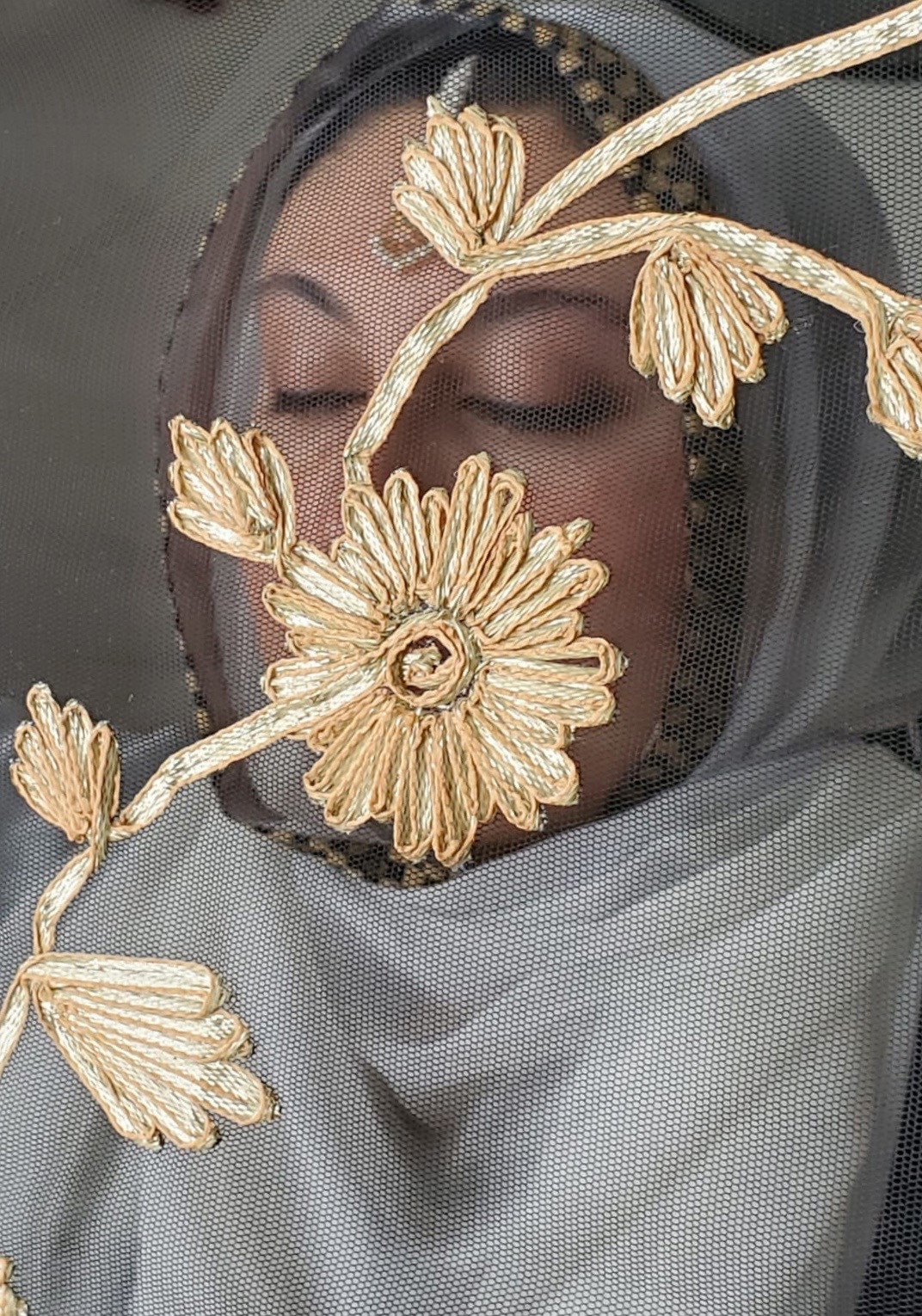
Gota dupatta
Portrait of Aysha Jamali
I’ve experienced othering throughout my life, which has pushed me toward a path of exploring my South Asian identity to re-center myself. One of the ways I challenge the disconnection I experience from my ancestral identity due to displacement is by paying attention to where my curiosity is sparked. The embroidery featured in this portrait, known as gota, has always been one of my favorite styles. Gota embroidery uses the applique technique where small pieces of zari ribbon are sewn onto fabric to create elaborate patterns.
After taking this portrait, I looked deeper into the origins of gota. What I learned is that this type of embroidery is believed to have originated from the northern region of the Indian subcontinent from where my family was displaced under British imperialism. It is clear to me that my love for this form of adornment is not a mere coincidence, but something that has been passed through generations and persisted past displacement.
How I got this shot: I’m actually holding the netted dupatta with the gota embroidery on it in front of me. I wanted to highlight the gota in a different way, as if it’s a part of me!
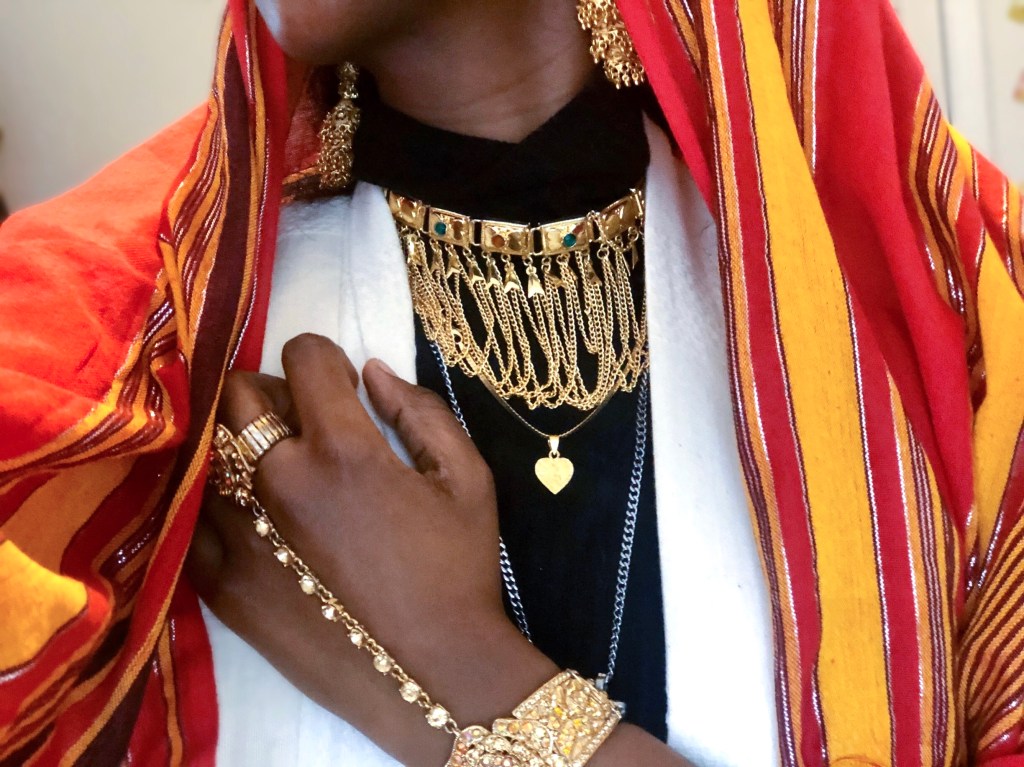
Hidiyo Daqan
Portrait of Asha Noor
I am a Somali woman. My family comes from a city called Laas Qoraay, an ancient coastal city in the Horn of Africa. Our migration story has many layers. My grandparents left this coastal region after a major tsunami which took everything in its path in 1971. They took what was left, and helped establish a new town called Badhan.
This print is indigenous to Somalis, and signifies traditional wear. The phrase hidiyo daqan cannot be translated in English adequately, but it broadly means heritage and traditions. In this portrait I am adorned with gold jewelry from my maternal lineage that is typically worn as a part of celebrations, and ceremonies.
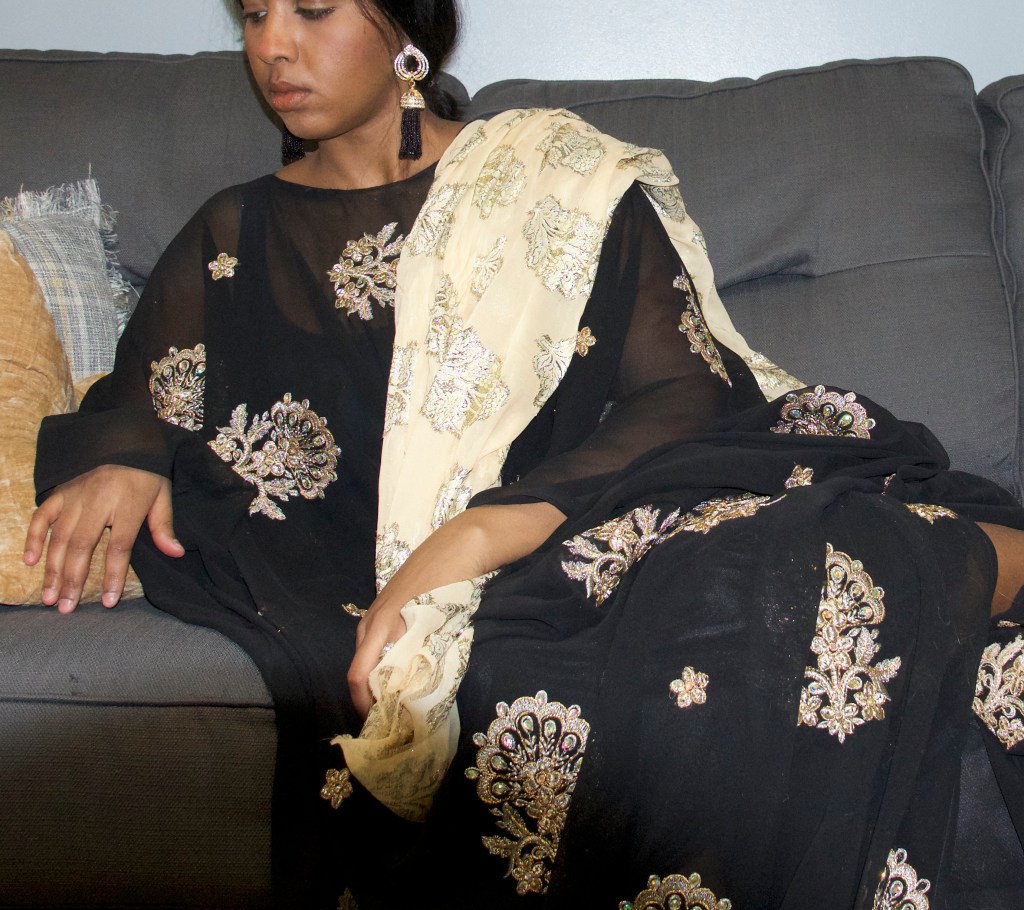
Dirac
Portrait of Anisa Jibrell
I am a black, Somali Muslim woman. My father is from a town called Badhan, situated in the Sanaag region of northern Somalia, and my mother is from a northeastern city called Erigavo.
A dirac is a long, loose-fitting, semi-transparent dress made from cotton. It is usually worn with a gorgoraad, an undergarment.
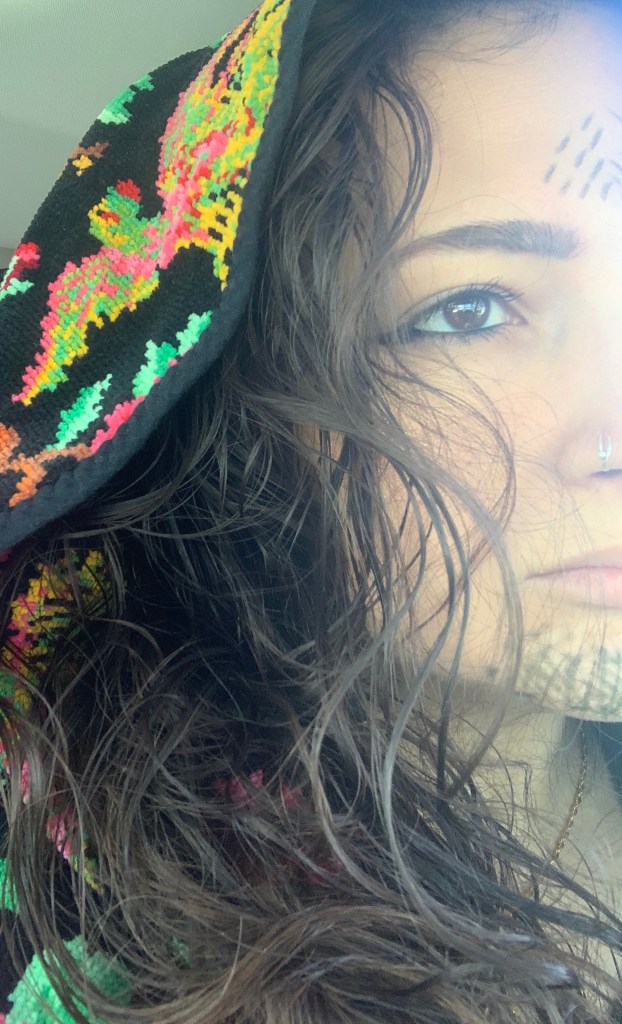
Portrait of Isra Daraiseh
 From Other to Center